

How to Design a Music Strategy for Your Hotel (Lobby to Spa to Pool)
By the finetunes Editorial Team
Short answer: A hotel moves a single guest through very different emotional states in one day: calm at check-in, energy in the gym, relaxation at the pool, sophistication at dinner. One playlist for the whole property can't serve all of them. The fix is a multi-zone music strategy: a distinct sound and tempo for the lobby, spa, pool, gym, restaurant, and bar that still feels like one coherent hotel. This guide gives zone-by-zone BPM guidance for getting it right.
Walk into any five-star hotel and you'll notice something interesting: the music in the lobby sounds nothing like the music by the pool. The spa has its own world. The rooftop bar feels like a different planet entirely. And yet, somehow, it all feels like the same hotel.
That's not a coincidence. That's a multi-zone music strategy, and it's one of the most underused tools in the boutique hotel owner's playbook.
If you're running a hotel in Thailand, you already know that atmosphere is everything. Your guests make judgments about your property within the first 30 seconds of walking through the door. The decor, the scent, the temperature, and the sound. Music sets the emotional tone for every zone in your hotel, from the moment a guest checks in to the moment they drift off by the pool.
The problem? Most hotels treat music as a single decision. One playlist. One speaker system. One vibe for the entire property. And that's like serving the same dish at breakfast, lunch, and dinner, technically food, but completely wrong for the moment.
Let's fix that.
Why Hotels Need a Multi-Zone Music Strategy
A hotel is one of the few businesses where a single guest moves through radically different emotional states in a single day. They arrive tired and want calm. They head to the gym and want energy. They sit by the pool and want relaxation with a social edge. They dress for dinner and want sophistication. They hit the bar and want something alive.
Research from Cornell Hospitality Quarterly found that guests who rated a hotel's atmosphere highly were 35% more likely to rebook, and music was consistently one of the top three atmospheric factors mentioned in reviews. Not room size, not thread count. Atmosphere.
Guests who rate hotel atmosphere highly are 35% more likely to rebook. Music is consistently one of the top three atmospheric factors in hotel reviews, alongside lighting and scent.
When your music matches each zone's purpose, guests don't consciously think about the soundtrack. They just feel like your hotel "gets it." When it doesn't match: jazz in the gym, EDM in the spa, the dissonance is jarring, even if they can't articulate why.

Zone-by-Zone: Your Hotel Music Blueprint
Here's a practical breakdown for every major zone in your property. Use this as a starting framework and adjust based on your brand positioning, a barefoot beach resort will lean differently than a luxury urban hotel, but the principles hold.
Lobby & Reception
Target: 70–90 BPM | Genre: Ambient jazz, soft bossa nova, contemporary classical
The lobby is your first impression. Music here should say "welcome" without shouting. Think warm, unhurried, and slightly sophisticated, enough personality to signal what kind of hotel this is, but restrained enough that it doesn't compete with the check-in conversation.
Keep volume low. Guests are navigating luggage, reception, and orientation. The music should feel like a warm current underneath everything, not a presence demanding attention.
Time-of-day shift: Mornings slightly brighter (light piano, acoustic). Evenings slightly warmer (muted jazz, ambient electronic). The lobby at 7am and the lobby at 9pm should feel subtly different.
Restaurant & Breakfast Area
Target: 60–80 BPM (breakfast), 90–110 BPM (dinner) | Genre varies by meal
Your restaurant likely serves very different meals at different times, and the music should respect that. Breakfast wants gentle: acoustic, soft classical, light bossa nova. Nobody wants intensity at 7am over eggs and coffee.
Dinner is where you can make a statement. The tempo rises, the production gets richer, and the genre should match your restaurant's cuisine and concept. A Thai-inspired menu might weave in contemporary Thai jazz. A Mediterranean concept calls for different textures entirely.
The same restaurant at breakfast and dinner serves two different emotional experiences. Your music should shift with the meal, gentle acoustic mornings, richer and more expressive evenings.
If you want to understand more about how music affects dining behavior, the psychology is the same whether it's a hotel restaurant or a standalone venue, our guide to cafe music strategy covers the research in depth.
Pool & Beach Area
Target: 90–115 BPM | Genre: Tropical house, chill electronic, poolside lounge
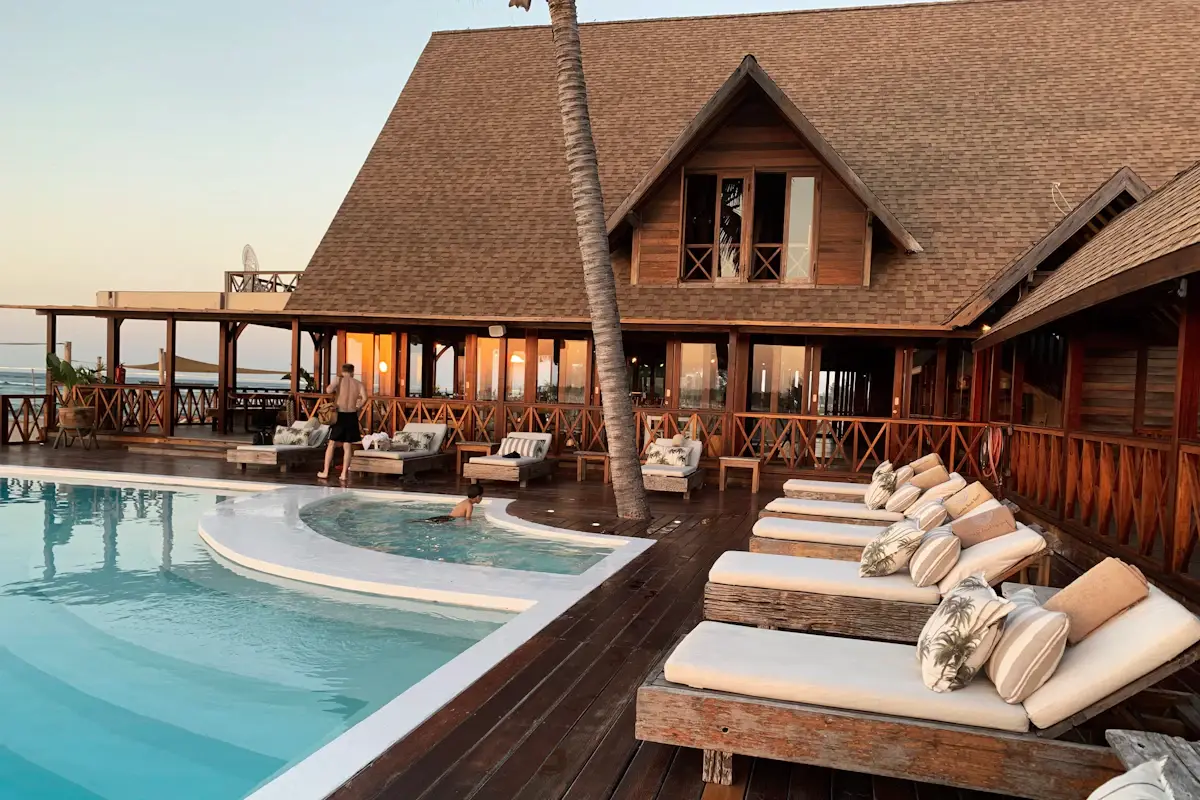
The pool is your social zone. Guests are relaxed but awake: sunbathing, chatting, sipping cocktails. The music here can be more present than the lobby. Think poolside lounge: tropical house, balearic beats, chill electronic with a groove.
Volume is trickier outdoors. You're competing with wind, water, and conversation. A dedicated outdoor speaker system calibrated for the space makes a huge difference, indoor speakers pointed at a pool area create dead spots and hot spots that ruin the vibe.
Thailand-specific note: Pool areas in Thai resorts often serve mixed demographics: Thai families, European couples, Chinese groups, digital nomads. Music that's culturally neutral but emotionally warm (instrumental-forward, melodic, groove-based) avoids alienating anyone while keeping the energy right.
Spa & Wellness Center
Target: 50–70 BPM | Genre: Ambient, nature soundscapes, gentle new age, Thai traditional elements
The spa is sacred territory. Music here isn't background, it's part of the treatment. The wrong track can undo 30 minutes of massage work.
Go slow, go minimal, go ambient. Nature sounds (water, birds, wind) layered under gentle instrumentation work beautifully. Traditional Thai instruments, the ranad (xylophone) or khim (hammered dulcimer), can add a distinctive Thai spa identity that international guests find memorable and authentic.
Avoid anything with prominent vocals, sudden dynamic changes, or recognizable pop melodies. The goal is to help guests lose track of time, not remind them of the outside world.
For a deeper dive into wellness-specific music strategy, explore our spa and wellness music solutions.
Gym & Fitness Center
Target: 110–140 BPM | Genre: Electronic, pop remixes, energetic instrumental
The gym is the one zone where "louder and faster" is actually appropriate. Guests here want energy, motivation, and momentum. Research on exercise performance consistently shows that higher-tempo music (120+ BPM) increases workout intensity and perceived enjoyment.
But even here, nuance matters. A hotel gym isn't a nightclub. Keep the language clean, avoid aggressive genres that might put off casual exercisers, and consider time-of-day: early morning gym-goers often prefer slightly lower energy than the afternoon crowd.
Check out our gym music solutions for BPM-optimized approaches.
Corridors & Elevators
Target: 60–80 BPM | Genre: Ambient, soft instrumental
These transitional spaces are often forgotten, but they matter. Silence in a corridor makes a hotel feel empty. Overly present music feels strange in a hallway. The sweet spot is barely-there ambient that provides acoustic warmth without demanding attention.
Keep it consistent with the lobby's tonal family, guests shouldn't feel a jarring shift walking from reception to the elevator. Think of corridors as sonic connective tissue between zones.
Bar & Lounge
Target: 95–120 BPM | Genre: Nu-disco, deep house, jazz-funk, cocktail lounge
The bar is where your hotel's personality gets to come alive. This is the zone with the most room for musical identity and the highest emotional impact. A rooftop bar in Bangkok with the right deep house set creates memories. A lobby bar with curated jazz-funk becomes a destination, not just a convenience.
This is also where time-of-day scheduling matters most dramatically. Early evening (5–8pm): cocktail jazz, bossa nova, light grooves. Late evening (8pm–midnight): the tempo and energy climb. Late night: full expression.
Your bar is where music shifts from background to experience. It's the zone with the most room for personality, and the highest impact on whether guests come back tomorrow night.
Time-of-Day Scheduling Across Zones
The best hotel music strategies aren't just zone-based, they're zone-plus-time matrices. Here's a simplified framework:
| Zone | Morning | Afternoon | Evening | Night |
|---|---|---|---|---|
| Lobby | Light acoustic (70 BPM) | Soft jazz (80 BPM) | Warm ambient (75 BPM) | Muted downtempo (65 BPM) |
| Restaurant | Gentle classical (65 BPM) | Light bossa (85 BPM) | Dinner jazz (100 BPM) | , |
| Pool | Chill acoustic (90 BPM) | Tropical house (110 BPM) | Sunset lounge (95 BPM) | , |
| Spa | Ambient (55 BPM) | Ambient (55 BPM) | Ambient (55 BPM) | , |
| Gym | Pop energy (120 BPM) | Electronic (130 BPM) | Mid-tempo (115 BPM) | , |
| Bar | , | , | Cocktail jazz (100 BPM) | Deep house (118 BPM) |
The spa stays consistent because treatment rooms need predictability. Everything else shifts: subtly, gradually, matching the natural energy of the day and the guests moving through your property.
Thailand-Specific Considerations
Running a hotel in Thailand adds unique dimensions to your music strategy.
Mixed guest demographics. Your guests might include Thai business travelers, European retirees, Chinese tour groups, Australian families, and American digital nomads, all in the same week. Music that's too culturally specific to any one group risks alienating others. Instrumental-forward music with universal emotional appeal works best in shared zones. Save culturally specific choices for themed restaurants or spa treatments.
Thai musical elements as a differentiator. Rather than playing traditional Thai music on loop (which can feel performative), weave Thai elements into contemporary arrangements. A jazz piece featuring a ranad melody. Ambient music incorporating Thai nature recordings. This creates an authentic sense of place without turning your hotel into a cultural exhibit.
Climate and outdoor spaces. Thailand's year-round warmth means outdoor zones are active 12 months a year. Your pool and garden music strategies aren't seasonal, they're permanent fixtures that need as much attention as indoor zones.
For a comprehensive understanding of music licensing requirements for businesses operating in Thailand, our music licensing guide covers everything you need to know about staying compliant.

Common Hotel Music Mistakes
One playlist for the whole property. The biggest and most common mistake. Your lobby and your gym have nothing in common emotionally. Treating them as one zone guarantees that at least half your spaces sound wrong.
Staff controlling the music. When front desk staff, bartenders, or spa therapists control the playlist, you get personal taste instead of strategy. Today's bartender likes reggae. Tomorrow's likes K-pop. Your guests experience whiplash. Music decisions should be centralized and scheduled, not delegated to whoever's on shift.
Ignoring volume calibration per zone. Volume that works in a bar destroys a spa. Volume that works in a corridor disappears in a pool area. Each zone needs independent volume control calibrated to its acoustic environment, and rechecked seasonally as occupancy patterns shift.
Forgetting transitions between zones. A guest walking from a calm spa to a pumping gym experiences a musical cliff. While the genres should be different, the transition should feel intentional, not accidental. Corridor music acts as a bridge.
Using personal streaming services. Beyond the legal issues with using Spotify or YouTube commercially, personal streaming services can't handle multi-zone scheduling, time-based transitions, or centralized management across an entire property. Hotel music is an operational system, not a personal playlist.
Making Multi-Zone Music Effortless
Designing a multi-zone strategy sounds complex. Done manually, it is. Coordinating seven different zones with time-of-day scheduling, genre curation, volume management, and licensing compliance across your entire property is a full-time job that nobody on your team was hired to do.
This is exactly what finetunes was built for. One platform manages every zone in your hotel with pre-curated playlists designed for specific spaces and moods, automatic time-of-day scheduling, and full commercial licensing: so your spa sounds like a sanctuary, your pool sounds like paradise, and your bar sounds like the place everyone wants to be tonight.
No licensing headaches. No staff playlist battles. No dead air in the corridor at 2am. Just the right sound, in the right place, at the right time.
Your hotel already tells a story through its architecture, its service, and its location. finetunes makes sure every zone sounds like it belongs to that story.
Ready to design your hotel's multi-zone music strategy? Start your free trial at play.finetunes.app (opens in new window) and hear what every zone in your property is supposed to sound like.
Related Articles
The 12-Hour Music Day: What a Month of Venue Playback Data Says About Thailand
We metered every hour of music our venues played in July 2026, across 38 Thai provinces. The average Bangkok venue ran music for 220 hours. The country peaks at one in the afternoon, not at night. Here is the full shape of the data, and how far to trust each number.
How to Audit the Sound of Your Own Venue
Before you redesign the sound of a room, write down what it is doing today. Five checks, one shift, a notebook. A sonic identity audit any operator can run without a consultant or a decibel meter.
The Business Case for the Music You Play
Music in a venue is an operating lever, not decor. Four decades of field research says it changes how long people stay and what they spend. Here is what the studies found, what they do not support, and how to decide what to change first.