

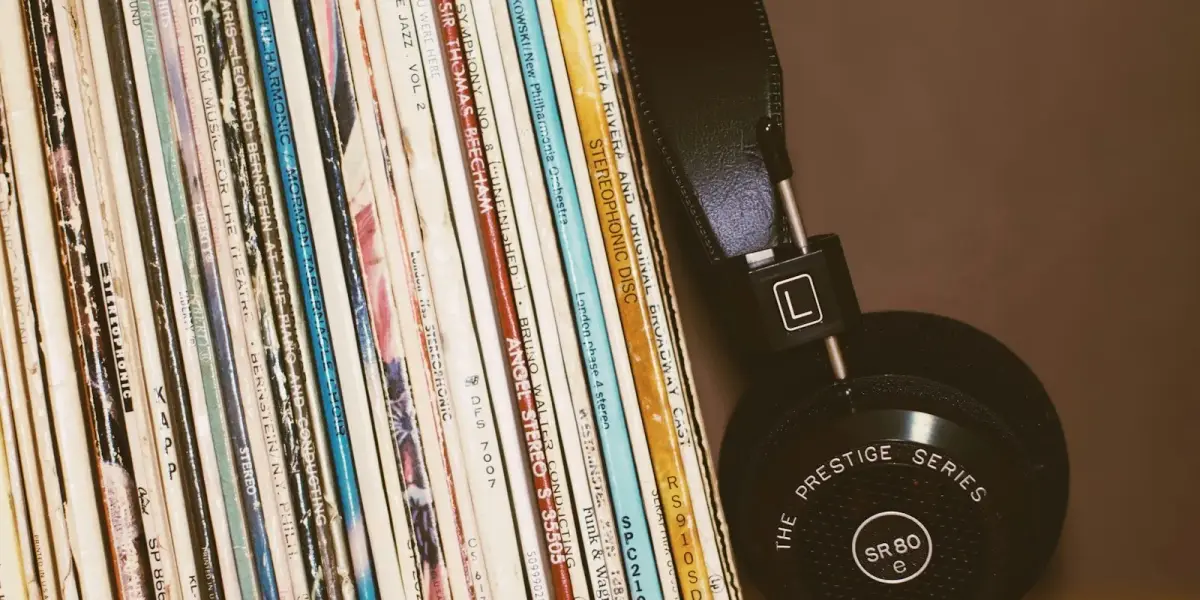
Stop Playing the Hits: Why Music Nobody Recognizes Is Better for Your Business
By the finetunes Editorial Team
Short answer: Playing familiar hits feels like the safe choice, but what research there is points the other way: unfamiliar background music can keep customers in the space longer, makes your brand more memorable, and spares staff the fatigue of the same Top 40 on loop. Recognizable songs make time feel slower, so people leave sooner. The takeaway, curate a lesser-known soundtrack that fits your space instead of defaulting to the charts.
You're opening a cafe. You've spent months on the interior, sourced beans from three different roasters, and agonized over whether the menu font should be Garamond or something more modern. Then someone asks: "What music are we going to play?"
And without thinking too hard, the answer comes: "I don't know, just put on something people know. Some pop hits, maybe a chill playlist."
It makes sense. People like what they recognize, right? Play a song they love and they'll feel at home. It's the safe choice. The obvious choice.
It's also, according to decades of research, probably the wrong one.
The Study Everyone Cites for This
Richard Yalch and Eric Spangenberg published a result in 2000 that cuts against the instinct. They built a simulated store in a classroom, filled it with outdoor clothing and gear, and asked around 70 people to shop it while either familiar contemporary music or unfamiliar easy listening played. People liked the two soundtracks about equally. Only the familiarity differed.
Half the group got a fixed 11 minutes. The other half could take as long as they wanted. In the group that controlled its own time, the people hearing familiar music finished sooner. In the fixed group, the people hearing familiar music came out thinking they had been shopping longer than they had.
So familiar music shortened the visit and stretched the felt length of it at the same time. The researchers linked the shorter visits to higher arousal, and were candid that the time-perception side came from something they hadn't measured.
How much weight this one carries: about 70 people, a classroom dressed as a store, one product category, and a simulated shop rather than a real one. The difference in actual shopping time was marginal in statistical terms, the difference in perceived time was not. Treat it as a signal worth testing in your own room, not a number to plan around. (Yalch and Spangenberg, 2000, Journal of Business Research 49(2))
Think about what this means for your business. The songs you're playing to make customers feel comfortable might actually be pushing them out the door faster.
The Distraction Problem
This makes more sense once you think about how we actually listen to music. When a song you know comes on, your brain doesn't just passively receive it, it engages. You predict the next lyric. You associate the song with a memory. Maybe you start tapping your foot or singing under your breath.
That's great when you're at home or in the car. It's not great when you're trying to create an environment where people focus on your food, your products, or the person sitting across from them.
Familiar music competes for attention with everything else in your space. Unfamiliar music supports the space without stealing the spotlight. It's the difference between a guest at a dinner party who tells great stories and one who talks over everyone.
A 2023 paper in Frontiers in Psychology tested a narrower version of this across five experiments. The question was variety-seeking: whether background music tempo changes how much people mix up what they pick. Fast music pushed people toward more varied choices, with arousal doing the work in between. The part that matters here is the boundary they found. The tempo effect only showed up when people knew the music. When the music was unfamiliar, tempo stopped mattering.
These were lab experiments about variety-seeking, not shoppers with a basket, so hold it loosely. Read conservatively, it says familiar music gives the tempo in your room a route into what people choose. Unfamiliar music doesn't open that door.

Your Staff Are Quietly Losing Their Minds
There's another side to this that business owners rarely think about. You hear your playlist for an hour during a visit. Your staff hears it for eight hours straight, five days a week.
A 2025 study led by Kathleen Keeler at Ohio State, published in the Journal of Applied Psychology, gave this a name: music misfit, the gap between the music an employee needs to work and the music the room is playing for customers. The team ran an online experiment with full-time workers, then a three week field study in which 68 people working in healthcare offices, retail stores and dining halls answered three short surveys a day.
On the days the music was out of sync with what they needed, employees reported lower positive feelings and more cognitive depletion, which is the paper's term for a drained capacity to concentrate. That carried into behavior: less of the discretionary helpful work people do for an employer, more of the counterproductive kind. The effect was worse for staff who find it hard to screen out background noise in the first place.
The paper doesn't hand out a tidy percentage for any of that, so neither will we. What it establishes is a direction and a mechanism, measured on real shifts rather than in a lab.
And this isn't a niche issue. Ohio State's write-up of the study puts about 13.5 million people in jobs where background music is standard, chosen for the customer rather than for the person hearing it all day.
A varied catalog of lesser-known music, rotated regularly, with enough depth that no one hears the same song twice in a shift, isn't just a nice perk for your team. It's a productivity strategy.
Playing the same popular songs on repeat doesn't just bore your staff. When the music misfits what they need to get through the shift, the research links it to lower positive feelings, more mental depletion, and less of the helpful discretionary work that keeps a venue running. A deeper, more varied playlist is an investment in your team's wellbeing.
The Brands That Understood This First
Some of the most distinctive retail and hospitality brands in the world figured this out years ago. And they didn't do it by playing the hits.
MUJI
MUJI has been making its own in-store music since 2001, long before anyone used the phrase "sonic branding." The company's own account of it: 24 CDs in the BGM series, more than 300 tracks, traditional music from 16 countries and regions, all of it original and all of it played by musicians who live where it was recorded. None of it is music you'd hear on the radio. All of it is music that makes a MUJI store feel unmistakably like MUJI.
In May 2021 they put it on the streaming services, 327 tracks in all, released country by country. The reason they gave was that people were spending far more time at home and wanted the shop's music there with them.
That's what happens when your music is curated rather than copied. It becomes part of your identity.
Starbucks
Starbucks bought a record shop to get at this. In 1999 it acquired Hear Music, a Bay Area store built around listening stations, and brought its people in house to put compilation CDs together. Through the 2000s the stores sold those CDs and the label released records by everyone from Paul McCartney to Sonic Youth. Two of the people who came out of that, David Legry and Holly Hinton, were still hand-picking the music when Fast Company interviewed them in 2017, about twenty years in.
The strategy was deliberate: every "What's that song?" moment was a tiny brand interaction. It positioned Starbucks as a place of discovery, not just convenience. The CDs stopped in 2015 and Spotify carries the in-store music now, but the curators stayed. Worth noticing which part they kept: the distribution changed, the people choosing the songs did not.
The lesson isn't to copy MUJI or Starbucks. It's that both treated unfamiliar music as the asset rather than the risk, and neither of them is short of customers.
People Don't Need to Know a Song for It to Work
One of the most quoted experiments in background music ran in one supermarket in the English East Midlands. Adrian North and two colleagues built an end of aisle display holding four French and four German wines, one of each per shelf, matched for price and sweetness, with small national flags marking where the bottles came from. For two weeks they played French accordion music and German Bierkeller brass on alternate days, quietly, from a tape deck sitting on the top shelf of the display.
Eighty-two people bought a bottle from that display. On French music days, French wine outsold German by 40 bottles to 8. On German music days it went the other way, though less sharply: 22 German to 12 French.
Here's the kicker: 44 of those 82 buyers stopped to fill in a questionnaire on the way out. Asked in their own words why they chose that bottle, exactly one person brought up the music. Asked outright whether the music had influenced their choice, six said yes.
The music didn't need to be a song anyone knew. It needed to point somewhere, and the researchers checked that it did: on French music days shoppers rated the music much higher on how much it made them think of France, and on German days the rating flipped to Germany.
What this study does and doesn't show: one supermarket, one two week period, one display of eight bottles in a store that stocked around 100 brands from each country. French music was only ever compared with German music, never with silence, so the figures say nothing about music versus no music. The researchers raised the obvious alternative themselves: the music may have pulled over people who already fancied a French wine rather than changing anyone's mind at the shelf. (North, Hargreaves and McKendrick, reported in Nature in 1997 and in full in the Journal of Applied Psychology in 1999)
This is the real power of background music in business settings. It doesn't work by being noticed. It works by being felt. And unfamiliar music: music that doesn't trigger recognition, nostalgia, or sing-along impulses, is often better at this precisely because it stays beneath the surface.

"But Won't Customers Feel Alienated?"
This is the fear that keeps most business owners glued to the Top 40. And it's understandable, nobody wants to play something so obscure that customers feel uncomfortable or confused.
But there's a big gap between "songs everyone knows" and "experimental noise that makes people squirm." The sweet spot is music that sounds good, fits your atmosphere, and simply happens to be by artists your customers haven't heard of.
Think of it this way: when you walk into a nice restaurant, do you need to recognize the music to feel comfortable? Of course not. You just need the music to match the vibe. An unfamiliar jazz trio or acoustic artist that fits the mood is far better than a familiar pop song that doesn't.
Areni and Kim (1993) found something similar in a wine store in the US. They played either classical music or Top 40 hits. Neither changed the number of bottles sold overall, but classical music led to sales of more expensive wine. The music served as a quality cue. It signaled sophistication. And none of those customers needed to know the specific piece being played for the effect to work.
Your customers don't need to recognize the music. They need the music to tell them something about the kind of place they're in.
How to Make the Shift
If you're currently running a Top 40 or mainstream playlist, you don't have to flip a switch overnight. Here are some practical starting points:
Start with your off-peak hours. Test lesser-known music during slower periods when the stakes feel lower. Pay attention to whether customers seem more relaxed, stay longer, or comment on the atmosphere.
Think in moods, not genres. Instead of searching for "jazz" or "indie," think about the feeling you want to create. Warm and inviting? Focused and calm? Lively but not overwhelming? There's excellent unfamiliar music in every mood category.
Rotate frequently. One of the biggest advantages of a deep catalog is that you can avoid repeating the same songs in a single day, or even a single week. Your staff will thank you, and your regulars will notice the freshness.
Trust the space, not your personal taste. The music isn't for you. It's for the room and the people in it. A great playlist for your car might be a terrible playlist for your business.
Pay attention to the "What's that?" moments. When a customer or staff member asks about a song, that's a sign your music is working. It's creating engagement on your terms, curiosity rather than distraction.
The Quiet Advantage
There's a reason the businesses with the most distinctive atmospheres tend to play music you've never heard. It's not because they're trying to be obscure or pretentious. It's because they've figured out something counterintuitive: the less recognizable the music, the more it becomes theirs.
When every cafe on the block is playing the same Spotify "Cafe Music" playlist, the one that sounds different is the one people remember. Not because of any individual song: but because the overall feeling is unique, cohesive, and intentional.
That's what curated, lesser-known music gives you. Not a background track, but a signature. Something that belongs to your space and nobody else's.
And the research points the same way: customers can linger longer, staff feel better, what people reach for shifts with what they hear, and your brand gets something money can't easily buy, a sound that's unmistakably yours.
finetunes curates commercially licensed playlists built around your business's unique atmosphere, not around what's trending on the charts. Thousands of tracks your customers won't find on the radio, all fully licensed for commercial use. Explore how it works (opens in new window)
Sources
Every study cited above, with links to the papers. The figures come from the papers themselves, with two exceptions, both marked in the list: the description of Areni and Kim, whose conference paper we could not open, follows the summary of that study in North, Hargreaves and McKendrick (1999); and the 13.5 million figure comes from Ohio State's press release about the Keeler study, not from the paper. The MUJI and Starbucks sections are sourced at the end of the list.
- Areni, C. S., and Kim, D. (1993). The Influence of Background Music on Shopping Behavior: Classical Versus Top-Forty Music in a Wine Store. Advances in Consumer Research, 20, 336–340. Described here from the summary in North et al. (1999).
- North, A. C., Hargreaves, D. J., and McKendrick, J. (1997). In-Store Music Affects Product Choice. Nature, 390, 132. doi:10.1038/36484
- North, A. C., Hargreaves, D. J., and McKendrick, J. (1999). The Influence of In-Store Music on Wine Selections. Journal of Applied Psychology, 84(2), 271–276. doi:10.1037/0021-9010.84.2.271
- Yalch, R. F., and Spangenberg, E. R. (2000). The Effects of Music in a Retail Setting on Real and Perceived Shopping Times. Journal of Business Research, 49(2), 139–147. doi:10.1016/S0148-2963(99)00003-X
- Sun, W., Chang, E.-C., and Xu, Y. (2023). The Effects of Background Music Tempo on Consumer Variety-Seeking Behavior: The Mediating Role of Arousal. Frontiers in Psychology, 14, 1236006. doi:10.3389/fpsyg.2023.1236006
- Keeler, K. R., Puranik, H., Wang, Y., and Yin, J. (2025). In Sync or Out of Tune? The Effects of Workplace Music Misfit on Employees. Journal of Applied Psychology, 110(9), 1157–1173. doi:10.1037/apl0001278 The 13.5 million figure comes from Ohio State's write-up of the study.
- The MUJI figures come from Ryohin Keikaku's own announcement, Distribution of MUJI BGM via Various Music Streaming Services, 19 May 2021.
- The Starbucks account follows John Paul Titlow's interview with the company's two music curators, Meet the Music Nerds Behind the Tunes You Hear at Starbucks, Fast Company, 2 February 2017.
Related Articles

How to Audit the Sound of Your Own Venue
Before you redesign the sound of a room, write down what it is doing today. Five checks, one shift, a notebook. A sonic identity audit any operator can run without a consultant or a decibel meter.

Subliminal Messages in Music: Myth, Science, and What's Really Influencing You
In 1990, a heavy metal band went on trial for allegedly causing a teenager's death through a hidden message in a song. The verdict changed everything, but the real story of how music influences your mind is far more interesting than any conspiracy.

Every Venue Already Has a Sound. Most Didn't Choose It.
Forty years of research says the music in your room changes how long people stay and what they spend. Here's what the studies actually found, and a framework for deciding what your venue sounds like instead of leaving it to whoever opens up.